Blog
From Stress to Passion: Why Alignment Starts Inside
An Unlock Possibilities perspective inspired by Simon Sinek, Richard Schwartz, and John Demartini
An Unlock Possibilities perspective inspired by Simon Sinek, Richard Schwartz, and John Demartini
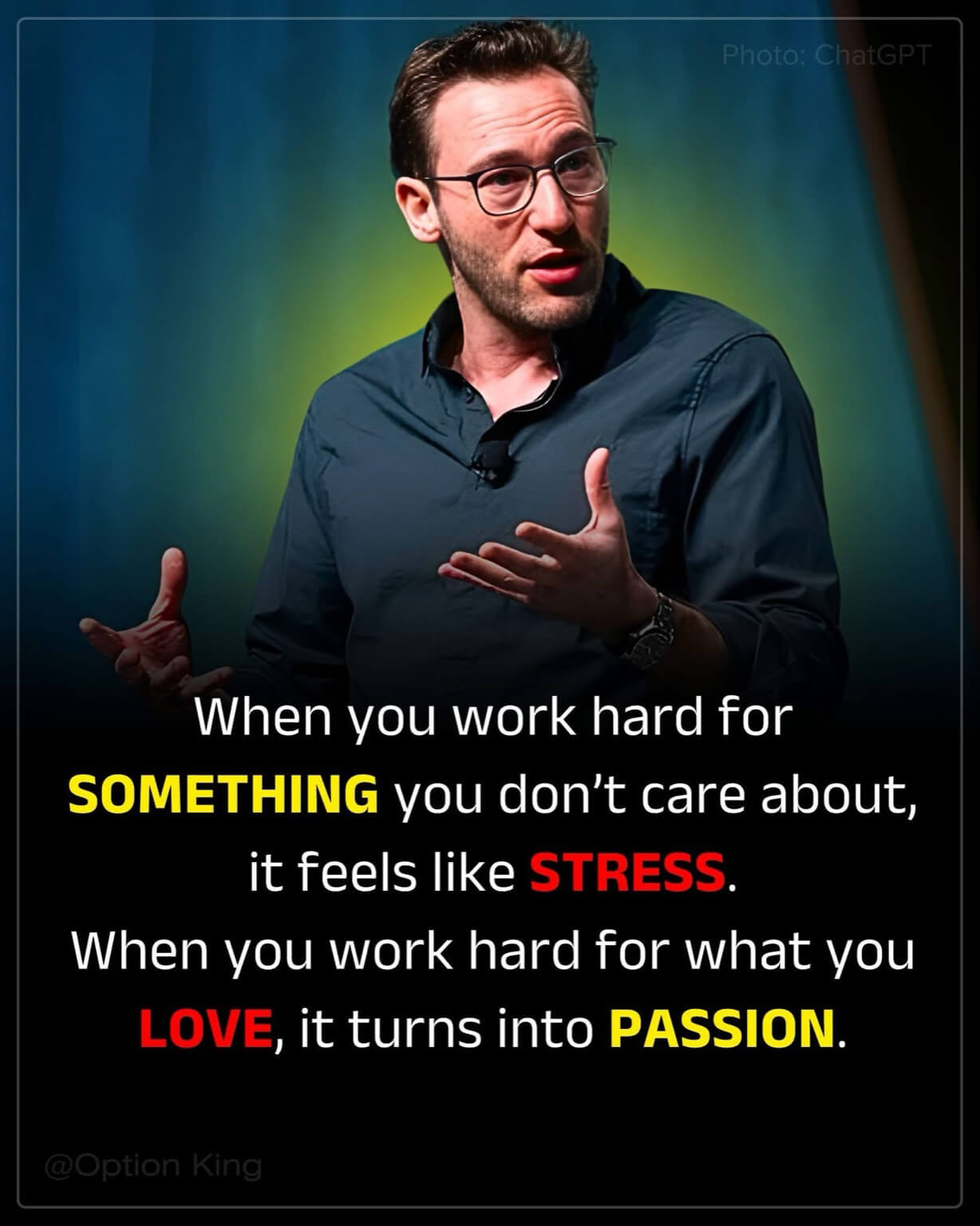
"When you work hard for something you don't care about, it feels like stress. When you work hard for what you love, it turns into passion."
— Simon Sinek
This observation is frequently shared as motivation across leadership circles and personal development spaces. Yet beneath its surface simplicity lies a far more confronting reality that most people overlook.
Stress is not merely external pressure — it represents internal conflict. It emerges when different parts of ourselves pull in opposing directions, creating friction that no amount of strategic planning or inspirational messaging can resolve.
Until we understand this fundamental truth about inner misalignment, we remain trapped in cycles of exhaustion disguised as effort, achievement that feels hollow, and success that never quite satisfies.
Simon Sinek's groundbreaking work in Start With Why challenges us to transcend surface-level questions about what we do and how we operate. Instead, it invites us to reconnect with the deeper reason behind our actions — the fundamental motivation that gives work meaning.
Yet countless people struggle at precisely this point. They attend workshops, draft purpose statements, and engage in strategic reflection exercises. The difficulty isn't a lack of intelligence or insight. Rather, it stems from a more fundamental issue: they are not internally aligned.
This is where Richard Schwartz's pioneering work with Internal Family Systems (IFS) offers an invaluable lens for understanding human motivation. Schwartz reminds us that we are not singular, unitary beings with one clear voice and direction. Instead, we consist of multiple parts — protective parts, striving parts, fearful parts, exhausted parts — each carrying its own agenda, beliefs, and survival strategies developed throughout our lives.
When our articulated "why" originates from a protector part — one driven by approval-seeking, status acquisition, or scarcity-focused thinking — the resulting effort inevitably feels burdensome. Even apparent success rings hollow. This is the essence of stress: working from the wrong part of ourselves.
In IFS terminology, stress emerges when parts of us actively work against each other, creating an internal tug-of-war that drains our energy and focus.
One part pushes relentlessly: achieve, perform, prove your worth. Meanwhile, another part quietly accumulates resentment: this isn't what I truly want anymore. A third part harbours deep anxiety about what might happen if we dare to stop.
From an external vantage point, this appears as pressure, busyness, or dedication. Internally, however, it represents profound misalignment — a system at war with itself.

This pattern creates the exhausting sensation of simultaneous acceleration and braking.
John Demartini would articulate this same phenomenon differently: we experience stress when living out of synchronisation with our highest values — when behaviour becomes governed by borrowed expectations rather than intrinsic meaning. Sinek would express it more simply: we are working without a true why.
This internal shift changes everything. The same hours invested feel different. The same challenges provoke different responses. The same outcomes carry different meaning. When Self leads rather than protective parts, passion becomes possible.
In The Infinite Game, Sinek argues persuasively that sustainable success emerges from playing for continuity, contribution, and trust — not short-term victories or quarterly targets. Yet infinite games cannot be played from a fractured internal system.
When leaders operate from anxious parts of themselves, organisations inevitably become reactive. Metrics begin to dominate meaning. Fear masquerades convincingly as urgency. Strategic thinking collapses into tactical firefighting.
IFS teaches us a profound systems principle: external systems reflect the internal state of their leaders. A leader's unexamined parts cascade through decision-making, culture, and organisational behaviour.

Demartini reinforces this understanding from a values perspective: disowned values inevitably create compensation behaviours — overwork, excessive control, constant comparison with others — all finite-game tactics that systematically exhaust both people and organisational cultures. Infinite play, by contrast, requires internal integration as its foundation.
At Unlock Possibilities, we observe this pattern recurring across contexts, industries, and leadership levels. The specifics differ, but the underlying dynamic remains consistent.
The work ahead is not to eliminate pressure, challenge, or difficulty from professional life. That would be neither possible nor desirable. The authentic work is to listen inwardly with courage and curiosity.

Transformation begins not with answers but with genuinely curious questions directed inward. These are not rhetorical exercises but invitations to honest self-examination.
These questions cannot be rushed. They require space, patience, and willingness to sit with uncomfortable truths. Yet they open the doorway to authentic alignment.
When effort originates from internal alignment rather than fractured parts, something fundamental shifts. Stress doesn't magically disappear — external demands, challenges, and pressures remain real and present.
What transforms is the quality of the experience. The internal warfare quietens. Effort becomes sustainable. Challenge becomes engaging rather than depleting.
This is the alchemy that Sinek observed but didn't fully explain: stress transforms into passion, exhaustion into endurance, work into a game worth playing indefinitely.
Because when effort flows from internal alignment, stress doesn't disappear — it transforms.
Into passion. Into endurance. Into a game worth playing, indefinitely.
The infinite game that Sinek describes becomes not merely a strategic choice but a natural expression of internal coherence. We play it not because we should, but because we cannot imagine playing any other way.
At Unlock Possibilities, we support leaders, professionals, and organisations in moving from stress-driven effort to passion-fuelled contribution.
Our approach integrates insights from IFS, values clarification, and purpose-driven leadership to facilitate genuine internal coherence — not as theory, but as lived experience.
Whether you're experiencing burnout, seeking deeper meaning in your work, or leading an organisation through transformation, the journey begins with internal listening.

Unlock Possibilities works with individuals and organisations ready to move beyond surface-level change towards authentic alignment, sustainable performance, and meaningful contribution.

 What Might Change If Life Was Designed From Within?