Blog
From Feedback to Field: The Case for Civility, Curiosity & Continuous Growth
Transforming workplace conversations from judgment to genuine connection

Transforming workplace conversations from judgment to genuine connection
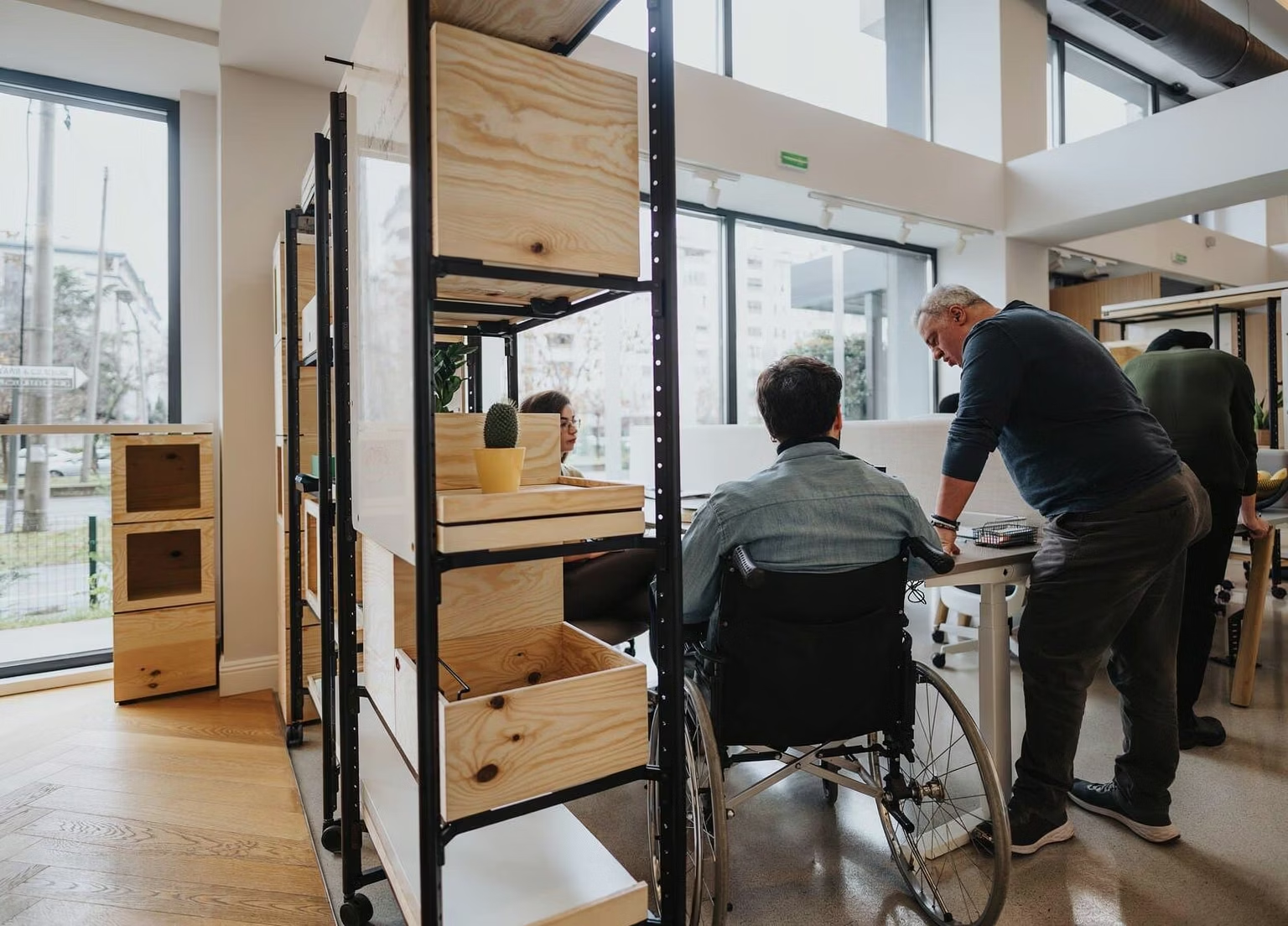
We've all heard these familiar phrases echoing through our workplaces: "Feedback is a gift." "Are you open to some constructive criticism?" "There is a complaints process." Each carries intention. Each offers value. Yet each also carries unspoken weight.
The truth is, none of these phrases exist in isolation. What determines their impact isn't merely the words chosen or the tone employed—it's the entire psychological environment in which they're offered. The field matters just as much as the feedback itself.
Without the right conditions, even the most well-crafted feedback can land as threat rather than opportunity. And when that happens, growth becomes impossible.
Traditional feedback approaches make a critical assumption: that the person receiving it feels safe enough, resourced enough, and open enough to actually hear it. Without these conditions in place, the most thoughtfully delivered observations are filtered through layers of self-protection.
This isn't stubbornness or resistance to growth. From an Internal Family Systems (IFS) perspective, it's completely natural. We are not singular beings—we are plural. Different parts of us hold different roles, and when feedback feels threatening, our protector parts instinctively step in. In that moment, genuine learning becomes impossible.
So perhaps the real question isn't "How do we give better feedback?" but rather: How do we create a field where feedback isn't needed—because authentic learning is already happening?
This is precisely where civility enters the conversation—not as an afterthought, but as the foundational element that makes everything else possible.
Civility is far more than simple politeness or surface-level courtesy. It is respect in action. It's what transforms a workplace from a collection of transactions into a genuinely human environment.
Civility creates the psychological space where someone can authentically say, "I'm not sure I understand—can you clarify?" without fearing judgment, ridicule, or professional consequences. It's the fertile soil in which curiosity can take root and flourish.
Without civility, we have compliance at best. With it, we create the conditions for genuine dialogue, mutual respect, and shared meaning-making. It's the common decency that makes transformative conversation possible.

What if we moved beyond traditional feedback models entirely? What if, instead of criticism or even constructive feedback, we approached workplace conversations through the lens of observations and considerations?
Language matters profoundly because language sets the emotional tone of every interaction. The words we choose either open doors or close them.
When we show up regulated—mentally, emotionally, and physically present—we create space to listen to hear, not merely to respond. This shift in presence changes everything.
This isn't a technique to be deployed. It's a way of being that emerges when we choose presence over performance. When we practice this approach consistently, we naturally become less reactive, more genuinely present, more open to learning, and ultimately more human with one another.
Consider the profound difference in how these words might land. Rather than positioning yourself as the one with answers who's come to fix or correct, you might say:
Notice what's changed. The other person isn't being assessed or evaluated. They're being invited into a shared exploration. Their autonomy is respected. Their perspective is valued. Their expertise in their own experience is honoured.

This approach doesn't diminish accountability—quite the opposite. It deepens it, because genuine ownership grows best in soil enriched by autonomy and respect. When people feel invited rather than interrogated, their capacity for honest self-reflection expands exponentially.
At Unlock Possibilities, and through our Create the Eight approach, we're not interested in forcing change or implementing interventions. We're interested in something far more sustainable: creating conditions where transformation emerges naturally.
As Sadhguru reminds us, two things are guaranteed in life: we are born, and we die. What happens in between is entirely our choice.
So when things "go wrong"—and they will—what if we stopped framing them as wrong? What if we asked instead: What might be possible from here? That single question, asked with genuine curiosity, has the power to change cultures, transform teams, and fundamentally alter lives.
The journey from feedback cultures to learning cultures doesn't require wholesale organisational transformation. It begins with simple shifts in how we show up in everyday conversations.
At Unlock Possibilities, we partner with organisations ready to move beyond traditional feedback models into something more human, more sustainable, and ultimately more effective. We don't offer quick fixes or one-size-fits-all solutions. We offer partnerships that honour your context, your people, and your

 The Quiet Challenge Of Understanding